The earliest Rosneath Parish Church was likely a simple wattle‑and‑mud structure, and tradition holds that it was among the oldest churches in Scotland. The ruin that stands today represents just one stage in a long sequence of churches built over many centuries in the Clachan of Rosneath. The earliest of these is believed to date back to the Dark Ages, and the time of Saint Modan in the Sixth century.
Evidence suggests that a second church was constructed in Rosneath around the 12th century, though its exact founding date remains uncertain; the earliest recorded mention, appears before 1199 at the time of Michaele Gilmodyne, the first recorded minister after St Modan. A portion of its crypt still survives, concealed beneath three concrete slabs to the southwest of the present ruin. Beneath these slabs lies a stone stairway leading down to an iron gate. This crypt later became the resting place of Lady Elizabeth Clough Taylor of Camsail House, daughter of George, 8th Duke of Argyll, who was interred there in 1897.
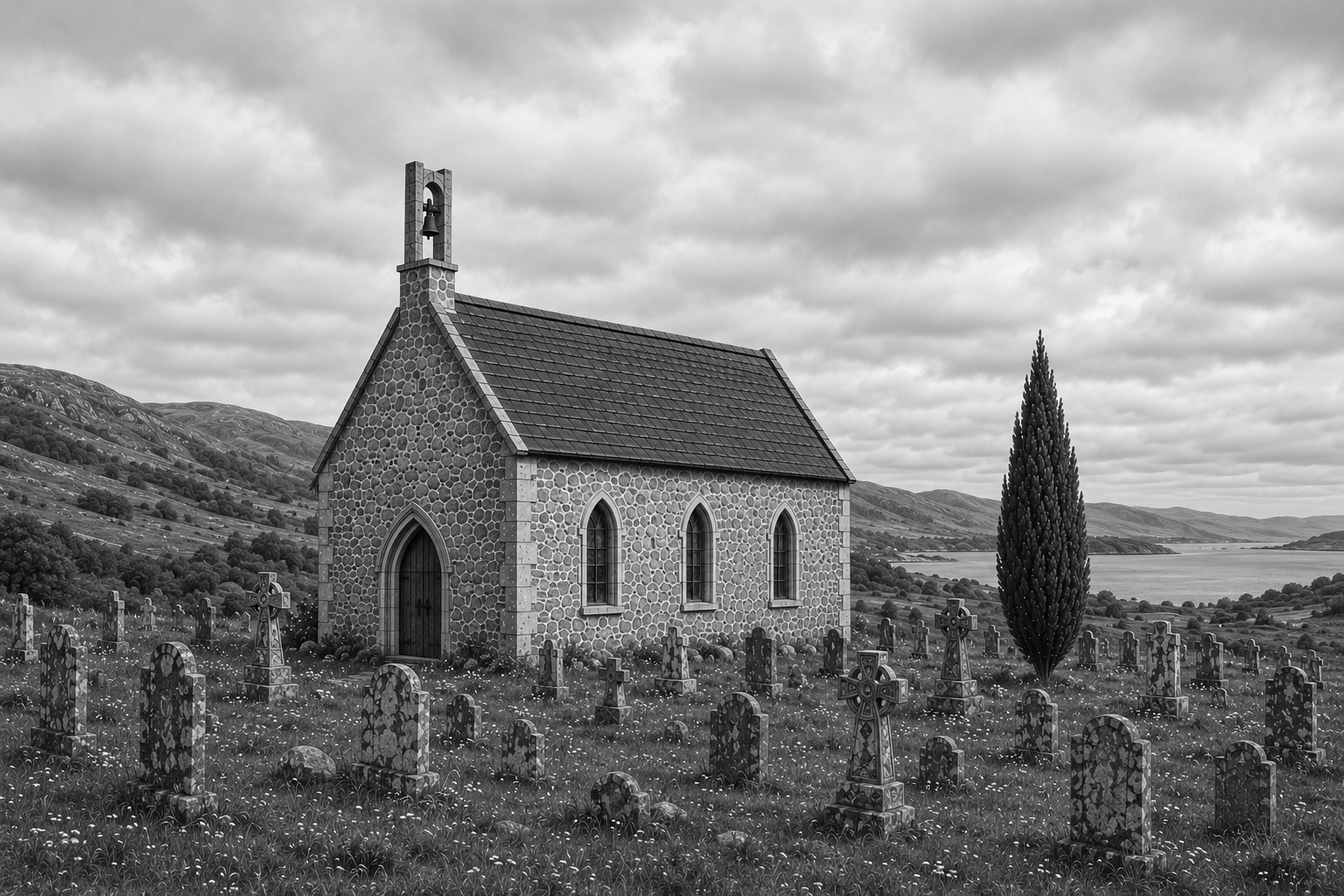
In the sixteenth century, a third church was built believed to be dedicated to St Mary or the Virgin Mary. It was described: “As cruciform in shape with a row of stone images round the pulpit. There was an ornamental bowl for holy water on open side of the entrance door. On the right-hand side of the door were 5 or 6 jougs – iron manacles for detaining wrong doers by the neck.”

In 1560 John Knox, in the ‘Buke of Discipline’ advised that “everie Churche must have., a bell to convocat the people together”.
In compliance, a ‘Bell’ was obtained in 1610 and mounted in the purpose-built Bellcote (belfry). This ornate Bell cote belfry survives today, forming the most visually distinctive remnant in the old kirkyard.
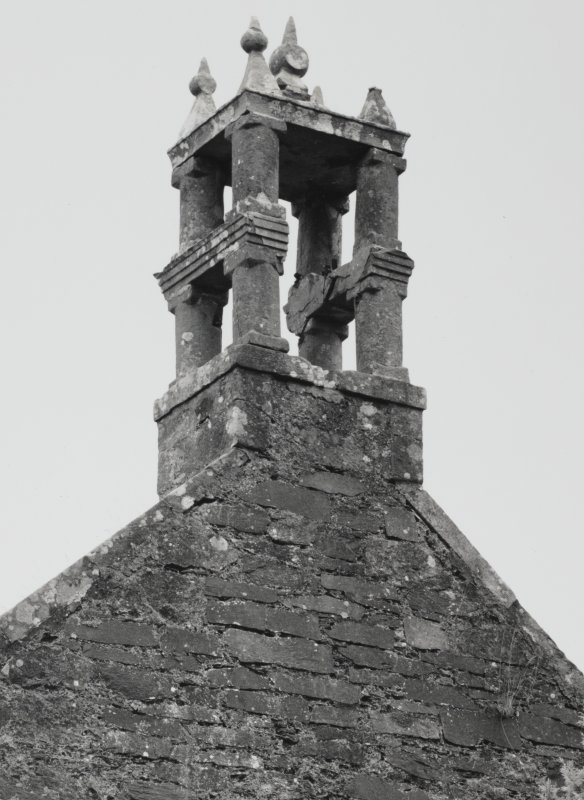
That bell, is known today as the Burgerhuis bell after the Dutch founder, where it has presided over a community that had changed a great deal during its illustrious service. The Bell has rung out over the Gareloch, noting the highpoints of alarms and celebrations for over 300 years. During the Jacobite Rising of 1715 the Church Bell was ordered rung by the then parish minister, Neill Campbell. He gathered “fifty stout parishioners together and marched at their head to join the John, Duke of Argyll on the side of the government”. They met the Duke near Stirling, who with astonishment remarked that the men of Rosneath were more suitable for handling the plough and the oar, than the sword or spear. He commended their patriotism and retained some for service on the boats, supporting the army on shore. Neill Campbell (1678-1761) was a Gaelic speaker due to the parish requiring a Gaelic minister. As late as 1720, there were still 26 families in the area who understood no English. Like many of Rosneath’s sons and clergy, Neill Campbell went on to be the distinguished Principal of Glasgow University in 1728.
It is believed that this bell is the same mentioned by Sir Walter Scott in his 19th century book, ‘Heart of Midlothian’, a story based on the true-life story of Helen Walker of Edinburgh. In that story, Jeanie Deans was sent by the Duke of Argyll back to Scotland, and on reaching Rosneath, found that the Duke had installed her boyfriend as Minister of Rosneath. The story describes the old bell as being cracked, “the bell was heard from the old moss-grown tower, and the clapper continued to thump its cracked sides”. However, this is considered as literary licence as the cherished bell remains intact today and is thought to still ring clear.
Between 1770-1780, the fourth Parish church was rebuilt through the efforts of Reverend Drummond, who ministered at ‘Roʃneath’ between 1766-1819. The Rev Drummond remodelled the old ‘Cruciform’ shaped Church, which by that time was in a “thoroughly bad state of repair”. The restored church was given an oblong shape, retaining the earlier appended gable end and Bellcote. The church was plain and austere, but in keeping with Parish churches of the eighteenth century.
The restored Church was a distinct improvement over the old church, now having larger windows with ampler and dryer accommodation. Despite incorporating the gable end and belfry it was a very plain structure, known by the Duke of Argyll as “The Barn” – (This presumably was John Campbell, 5th Duke of Argyll, as his father the John Campbell, 4th Duke of Argyll had died in 1870). The Marks of the Duke’s Gallery can still be seen in the West wall of the ruined church today. Historically, noble families often sat in elevated private pews, galleries, or private estate chapels that literally looked down upon the rest of the local congregation. This architectural separation emphasised their social rank, power, and distinct status, even during communal worship.
The old Parish church remained in use until 1853, when it was replaced by the current church known today as St Modan’s, just a few yards further down the ‘Clachan’. At that time the bell was moved from the old to the new Parish church, where it continued to ring in the new church Bellcote until 1907. Thereafter the old Burgerhuis Bell was considered too fragile and moved to an honoured position in the Transept of St Modan’s church, it was replaced by the more utilitarian bell in the St Modan’s church Bellcote.
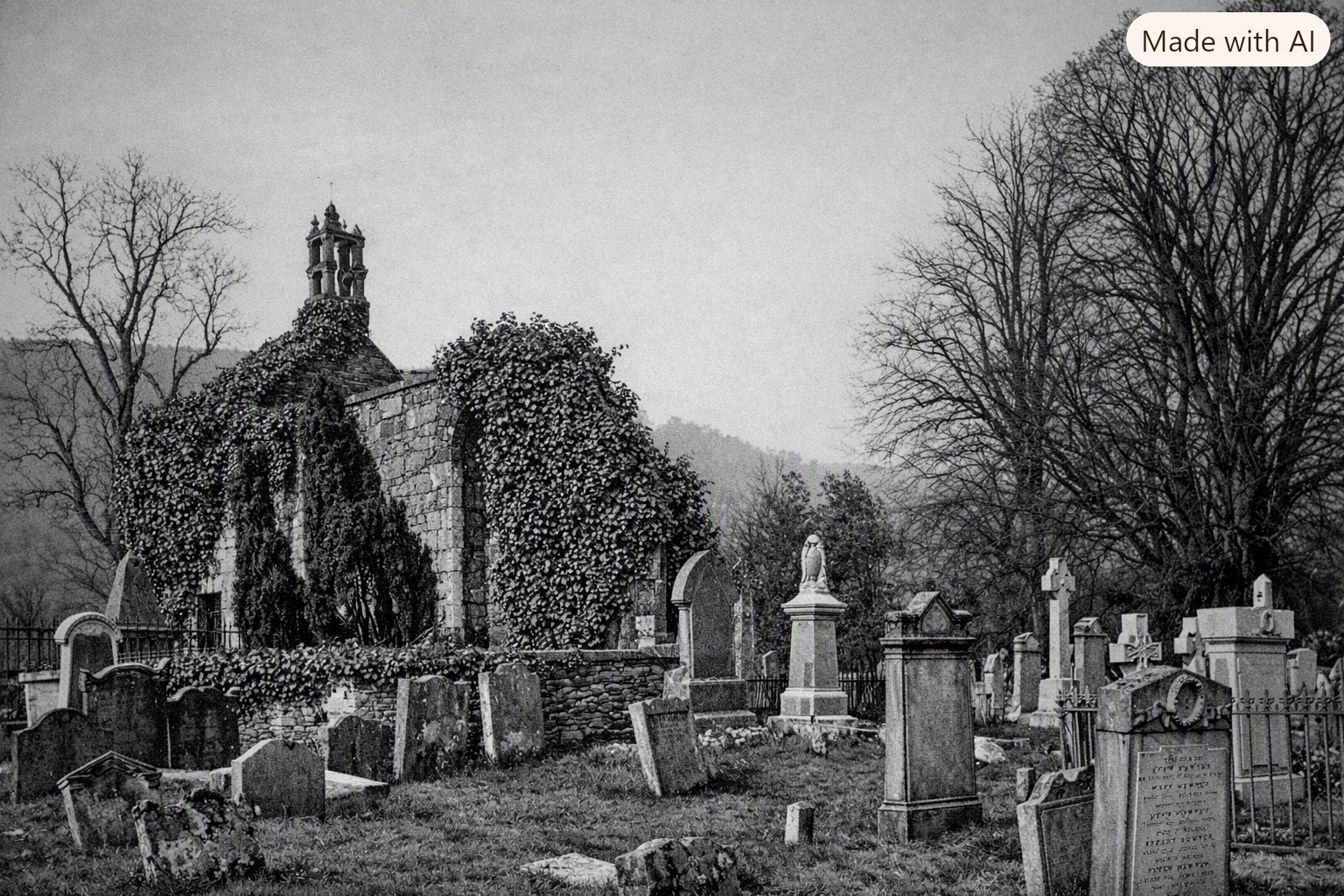
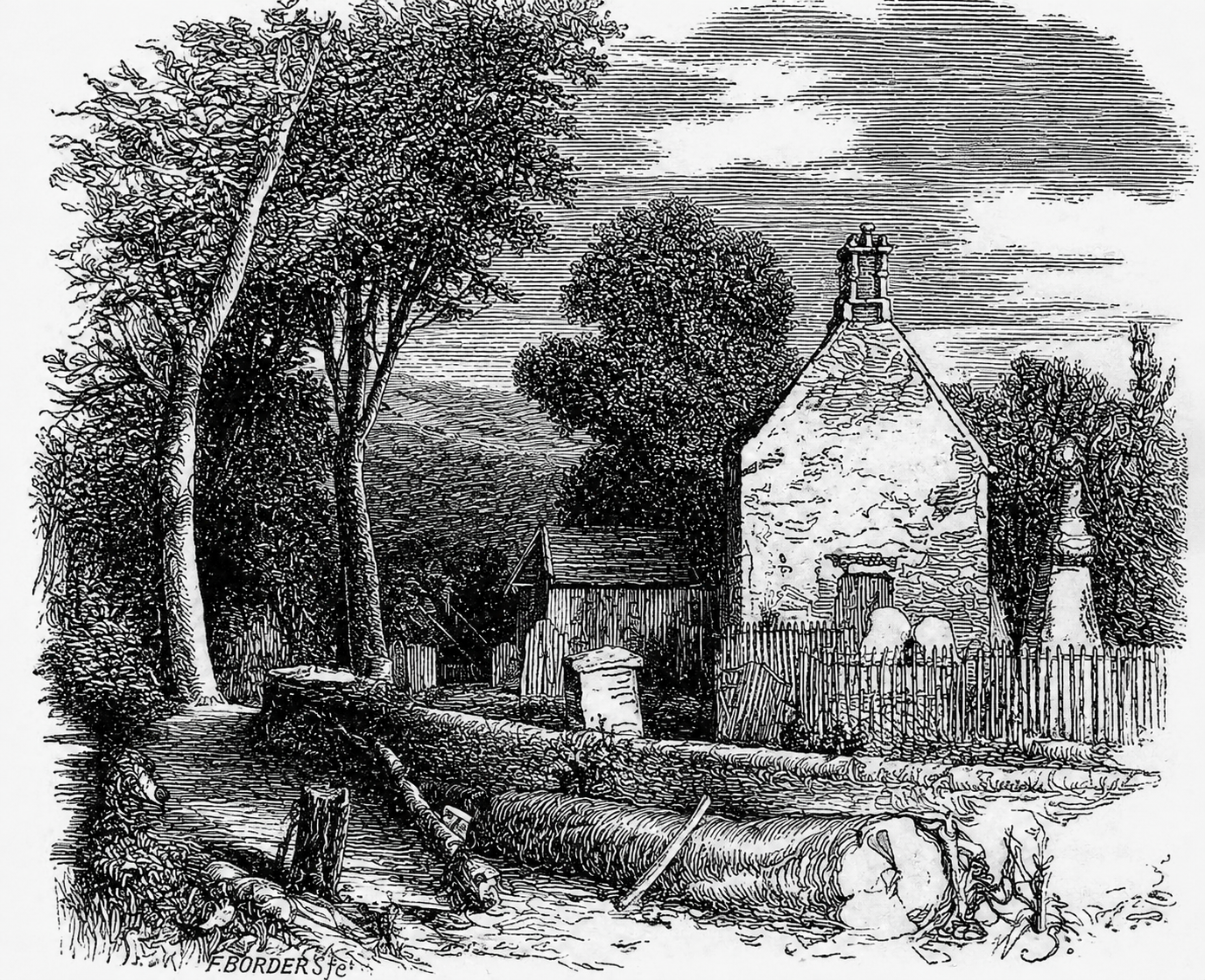
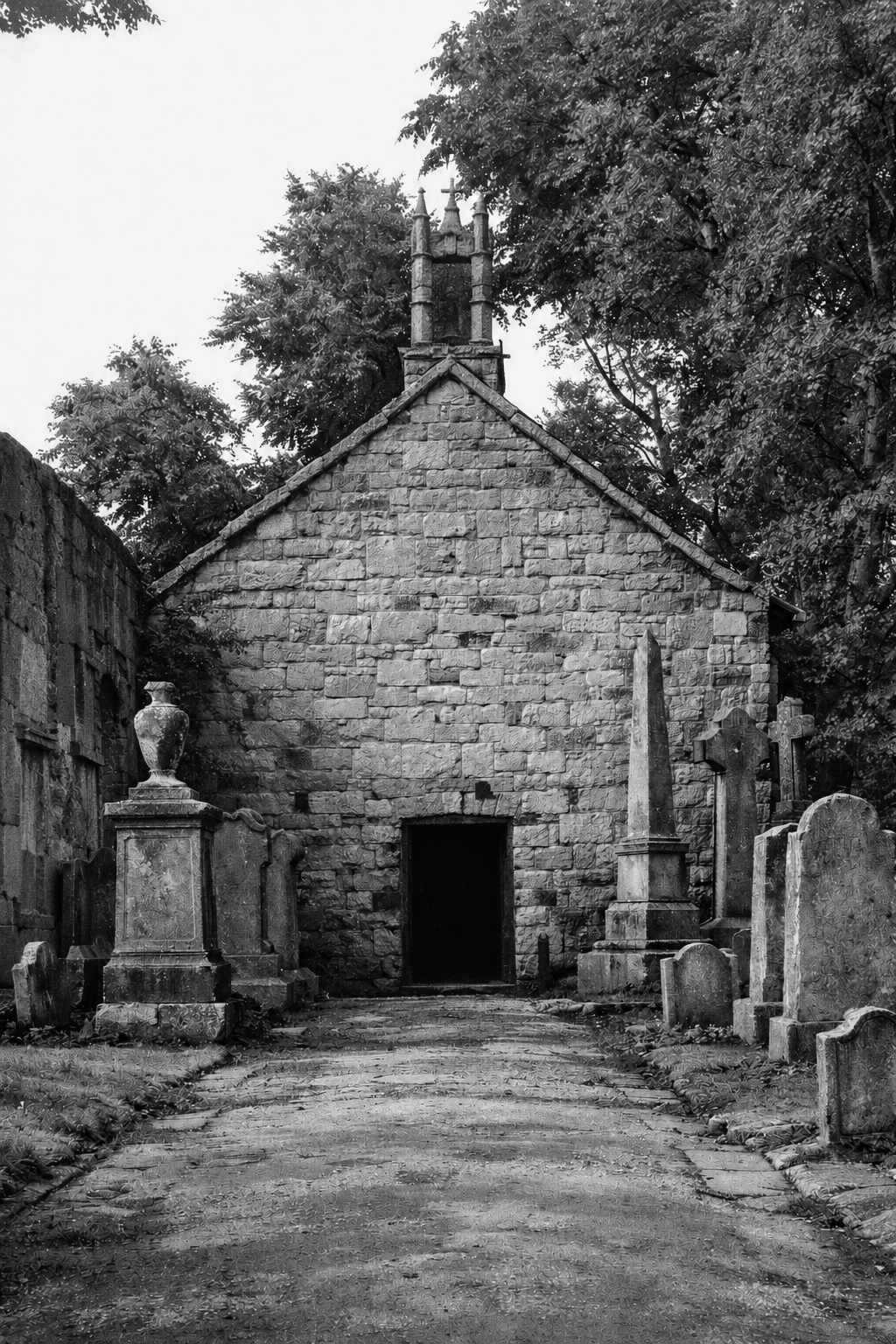
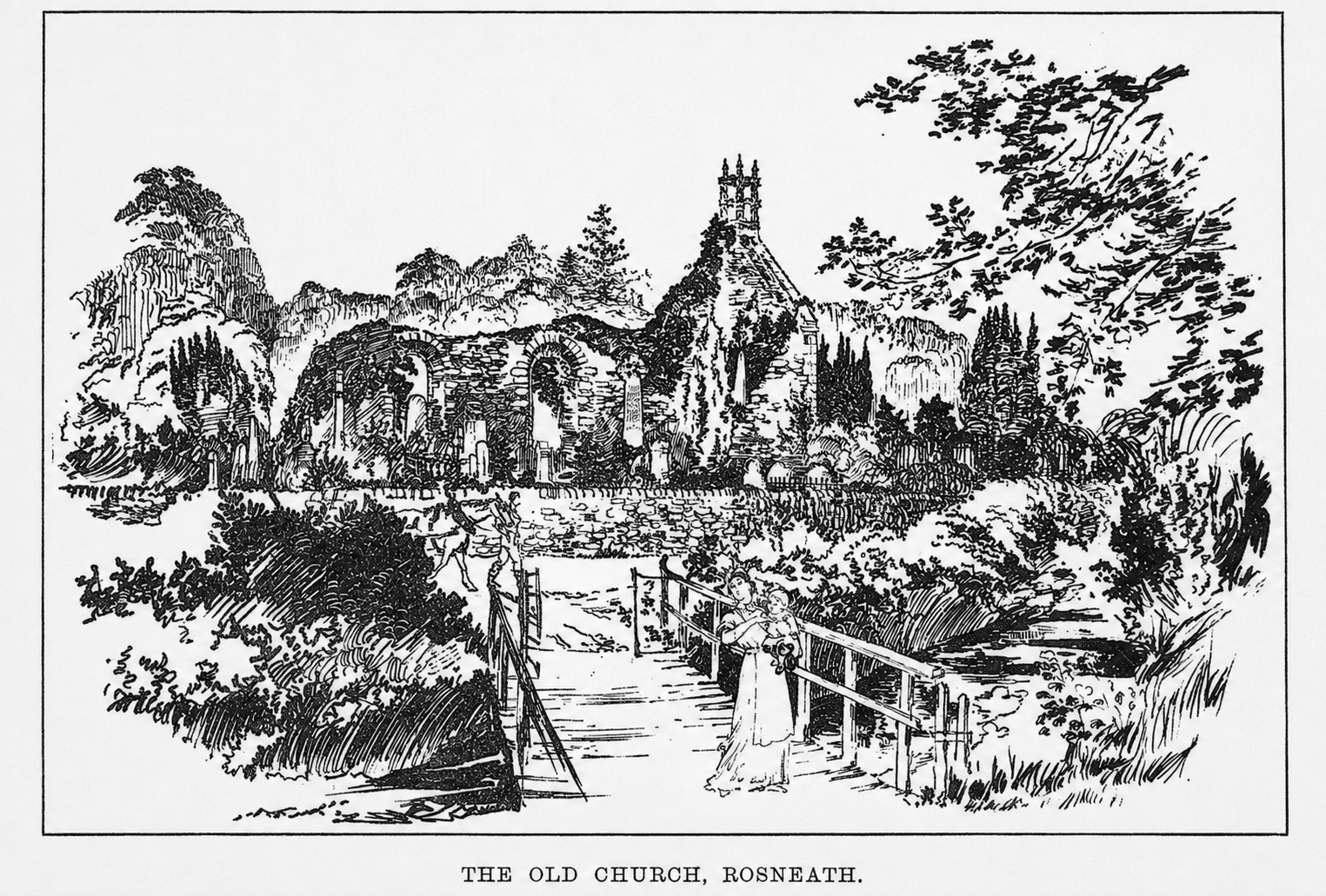
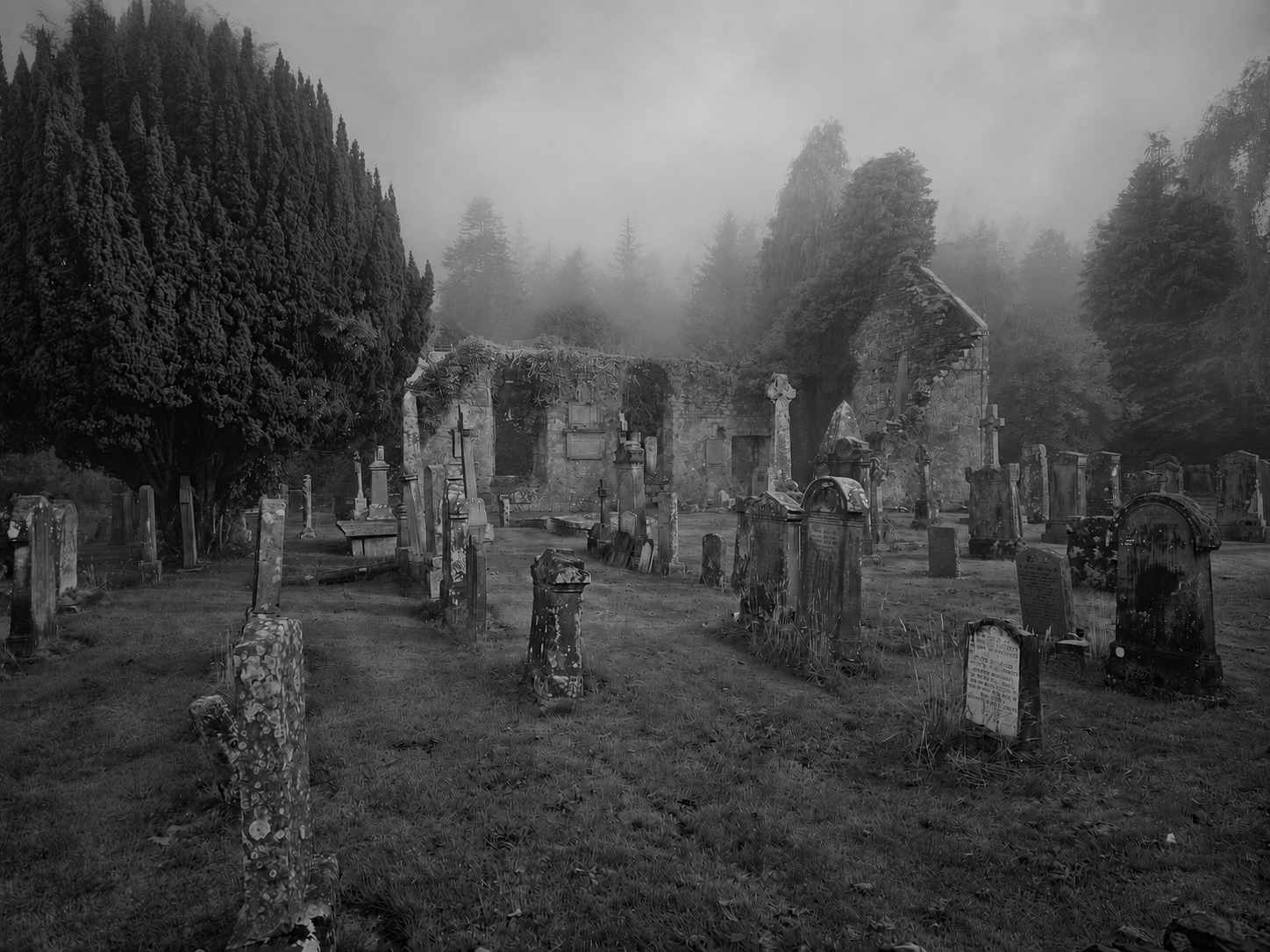
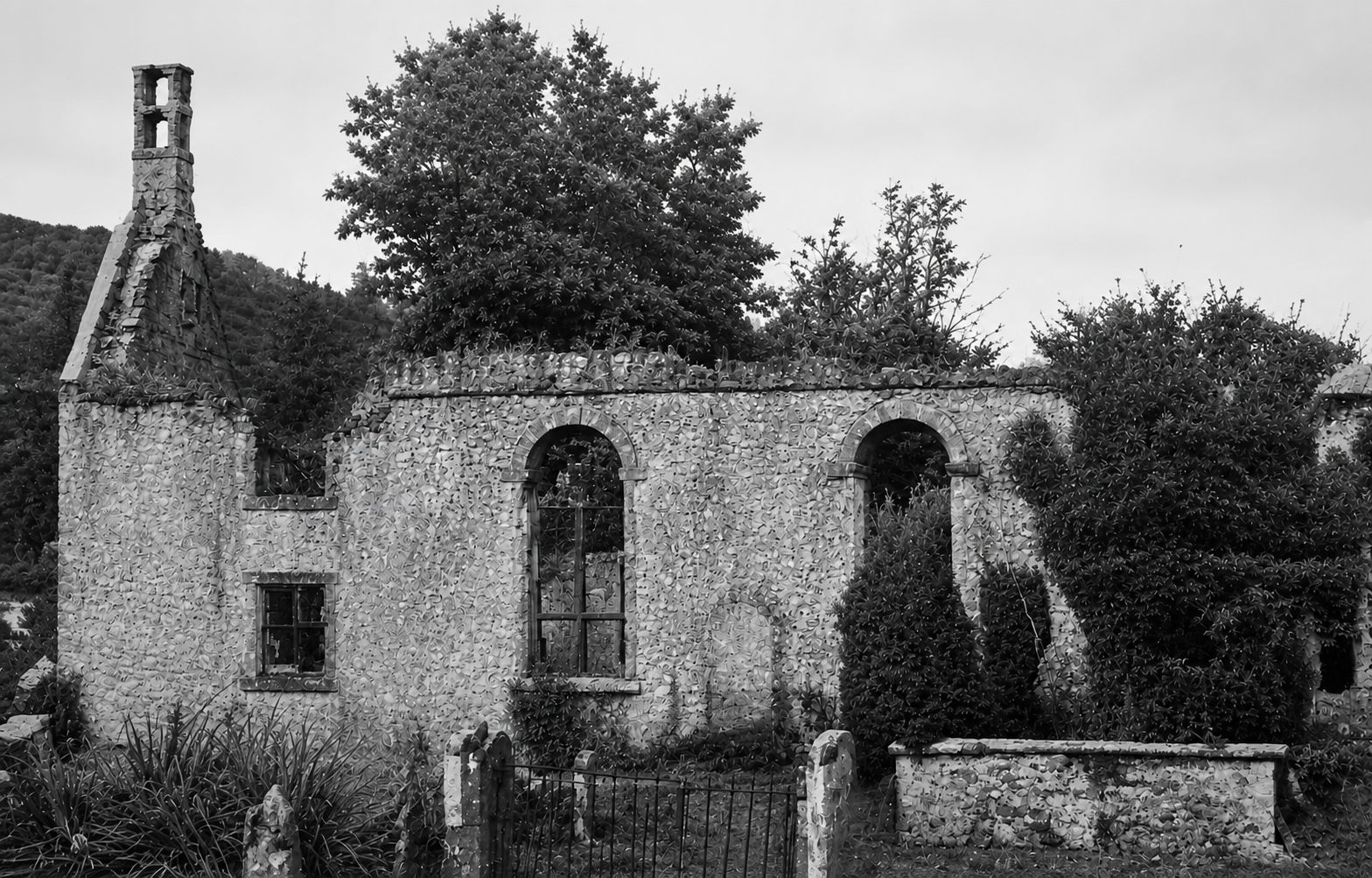
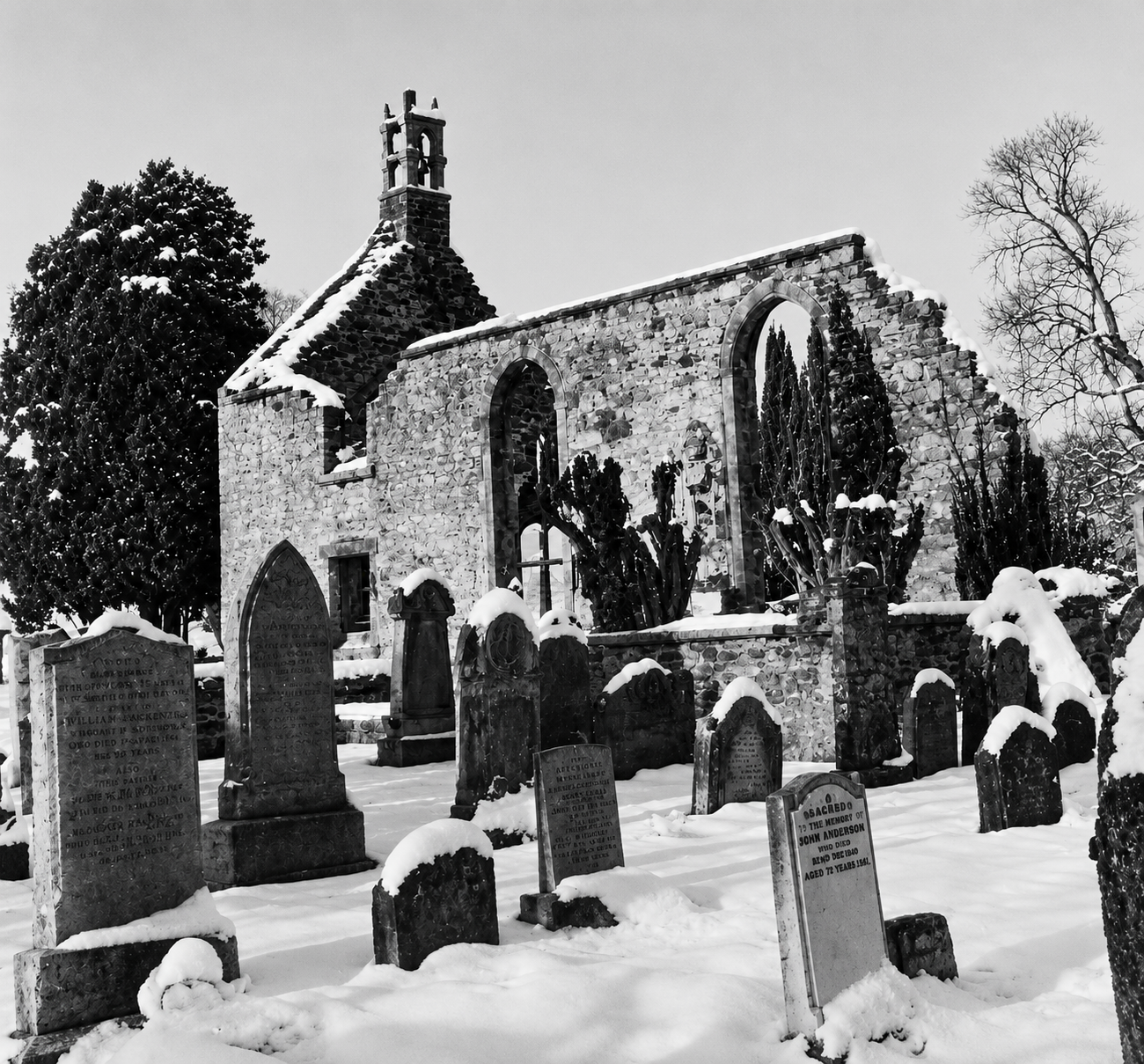
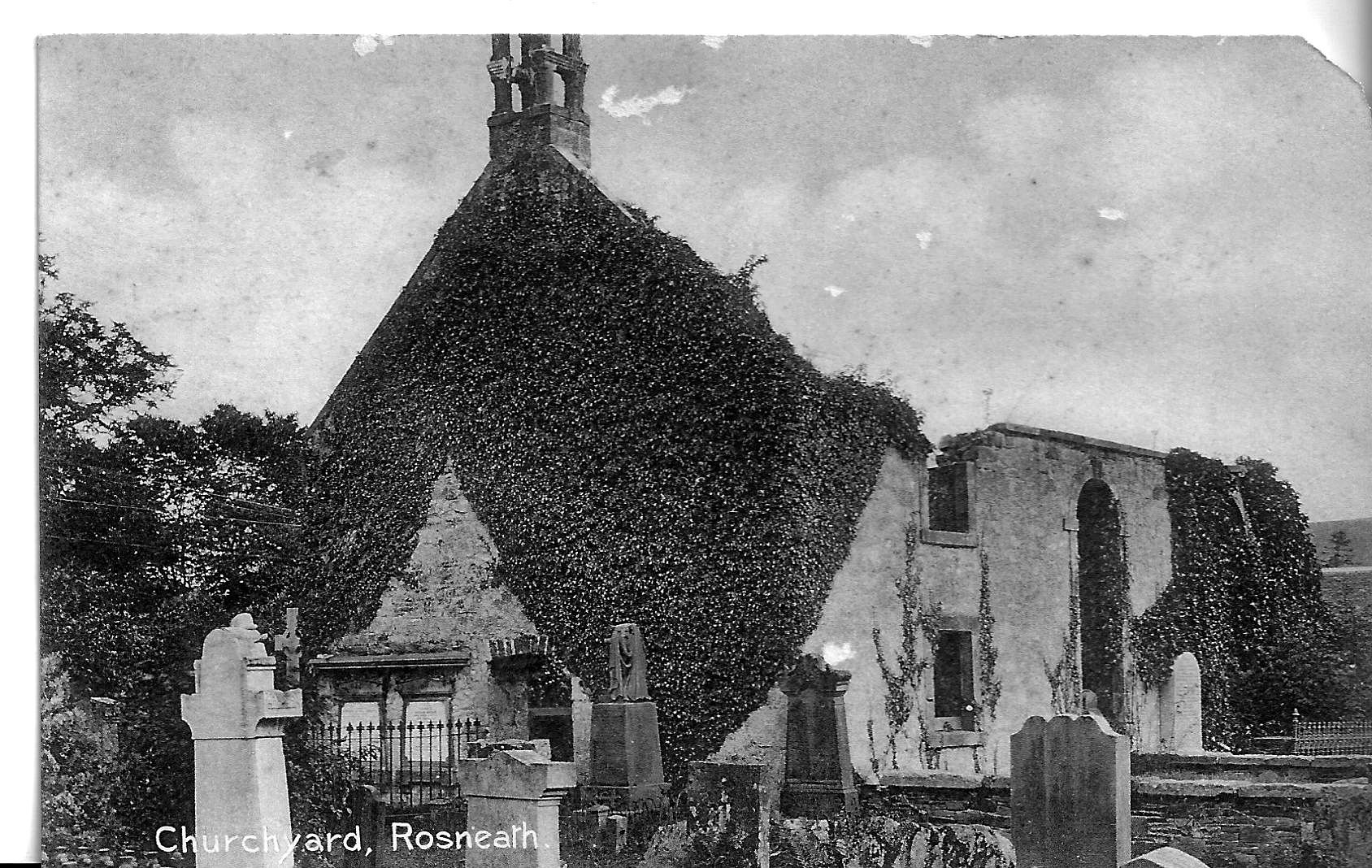
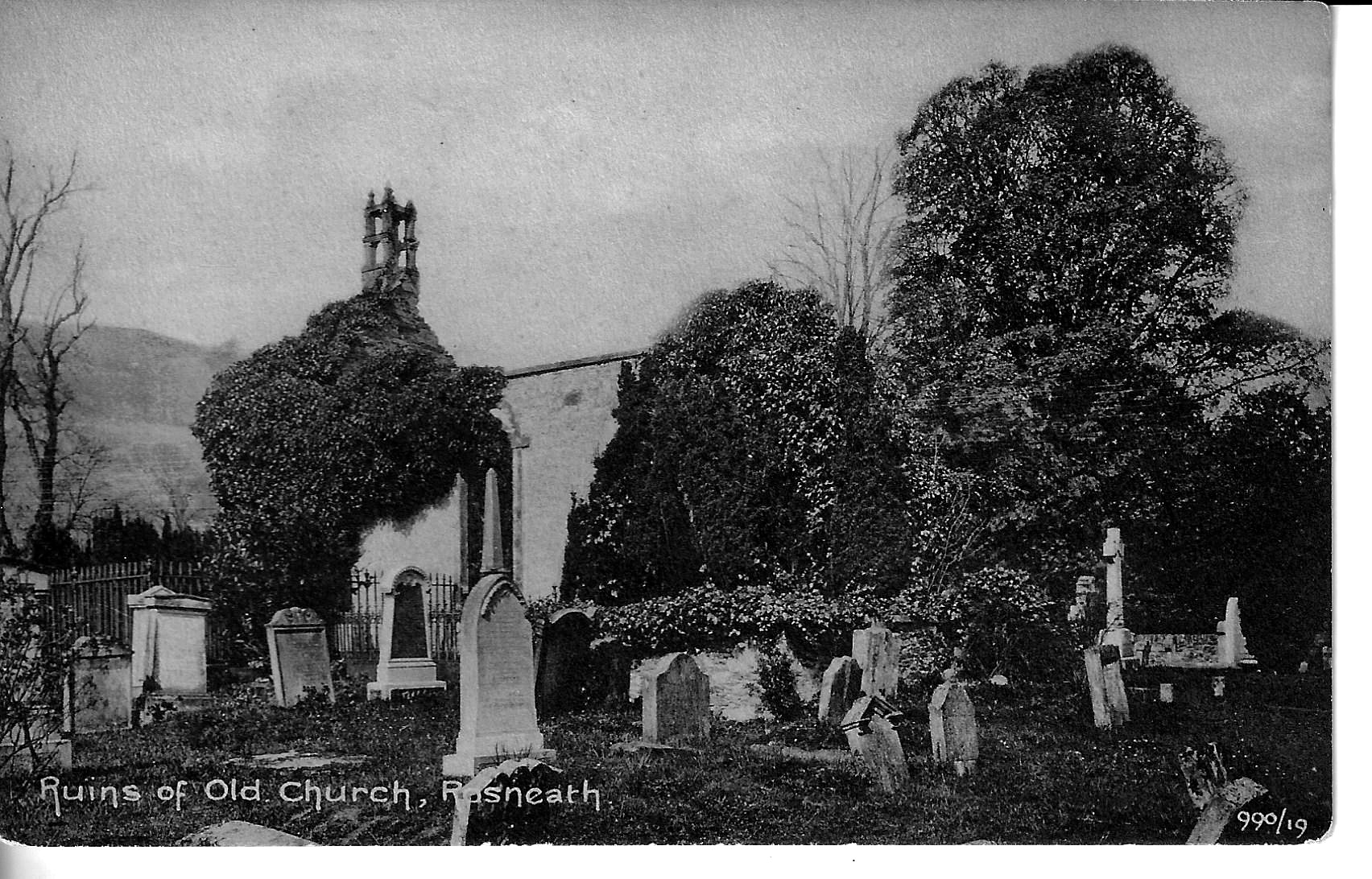
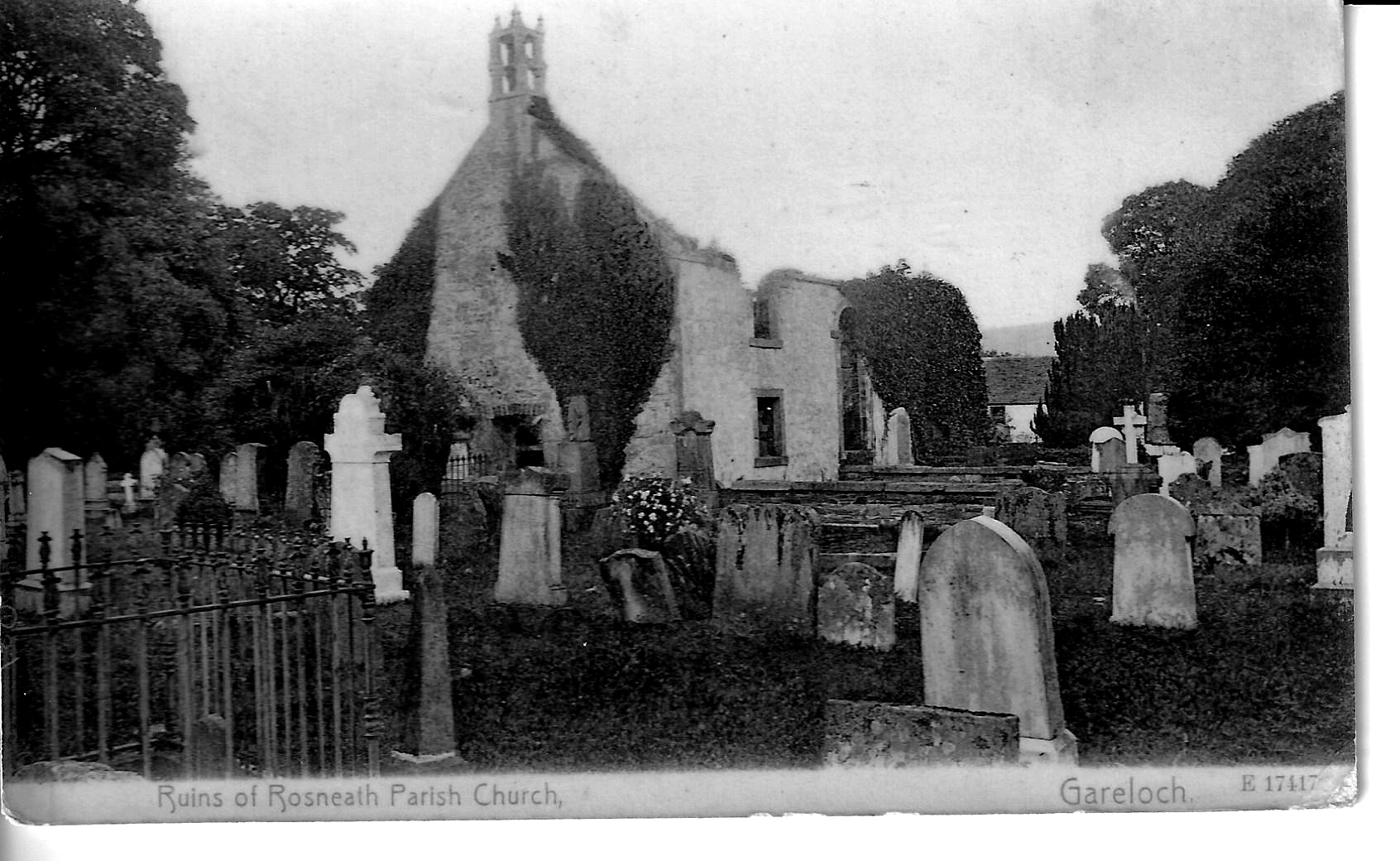
The ruins of the old church, listed by Historic Environment Scotland, is still visible today, in what is now the Rosneath old Parish Churchyard and Cemetery. The Churchyard, although a little overgrown and unkept, is full of atmospheric beauty and cultural significance, as a reminder of the long history of this community.
The relocation of worship to the new Rosneath Parish Church further down the Clachan, combined with the provisions of the Burial Grounds (Scotland) Act of 1855, meant that the old Parish Churchyard thereafter served solely as the community’s principal burial ground.
By the Victorian era, memorial traditions had shifted dramatically. Stone monuments, once reserved for the wealthy and distinguished, became increasingly widespread. The fashion for substantial, decorative gravestones flourished, transforming the medieval kirkyard into a landscape of enduring memorials for both ordinary parishioners and prominent local families, and where much of what exists in the Old Rosneath Graveyard today is from that era.
Notable Occupants of the Old Rosneath graveyard
The historic churchyard and burial grounds of the Rosneath Peninsula hold countless quiet testaments to the lives, labours, and losses of past generations, making a full accounting impossible within a single brief writing. The ancient Parish Church and Burial Ground contains centuries of local heritage, featuring Medieval grave slabs, 18th-century table slabs, obelisks, and moss-draped headstones carved with traditional memento mori symbols alongside trade motifs like shears and shoes. Among these historic markers lie figures of diverse legacy, from local figures caught in bygone ecclesiastical disputes to resting places rediscovered by later generations.
This historic graveyard holds countless memorials dedicated to those who passed away over the centuries, far too many to document within this brief article. The following short selection highlights only a few of the frequently remembered individuals resting in these sacred grounds. Readers are warmly encouraged to explore the rich history further through the additional links provided below, which include the complete catalogue of memorials and graves within Rosneath Graveyard.
| Rev George Drummond also wrote – 1792- First Statistical Account | Considered the first modernising Minister | Stone 68 |
| Rev Robert Story also wrote – 1841 New Statistical Account | ‘Father’ of Rosneath Church | Stone 258 |
| Robert Story | Grave of former African Slave | Stone 150 |
| Moses McNeil | Founder of Rangers FC | Next to Stone 113 |
| Peter Campbell | Founder of Rangers FC | Stone 233 |
| John McLeod Campbell | Of Rhu heresy fame | Stone 59 |
| Major Frederick Maurice Crum | Co-founder of Scottish Scouting | Stone 363 |
| William Frederick de Bois Maclaren | Benefactor to British Scouting | Stone 70 |
| Robert Thom | Laird of Barremman & Canna | Stone 352 |
| Duncan MacIntyre | WWI casualty and only CWGC | Stone 93 |
| Rev Alfred Warr & Very Rev. Sir Charles Laing Warr | Notable Local Minister and his Son who served as Royal chaplain to four British monarchs. | Stone 78 |
Observations and Interesting facts
- Graveyard is oval in shape – So the Devil can’t hide in the corners
- The general level of the graveyard is considerably higher than the surrounding paths; even the old church built in 1780 is so much higher
- 1300 years of burials. Thousands may have been buried there, with graves used over and over again.
- Historically, people may have been buried outside the consecrated boundaries of this churchyard because they were denied rites of the church. This included individuals who died by suicide, unbaptised infants, excommunicated persons, or certain criminals. Other reasons mahy have included a lack of space inside this full churchyard
- Majority of the stones marked the graves of people who had held positions in the community – where is everyone else?
- There are many stones under the grass
- There are a number of medieval Slabs mounted in the old Kirk windows and assumed to be those of Knights
- It was common to adorn headstones with Sculls and Skeletons – Denoting Mortality rather than Pirates
- John Marquis who was a weaver, and not a pirate as many would like to believe. Stone No: 214a
- Different spellings for the same names – The use of English and placenames had not yet standardised
- Oldest found grave Johanna Wilson 1698 Stone No: 326
- So many infants recorded, conjuring up pictures of epidemics or very severe weather conditions. Before 1820, average life expectancy at birth in Scotland was only about 30 to 40 years.
Catalogue of the graves of the Old Rosneath Graveyard
The Survey and Catalogues
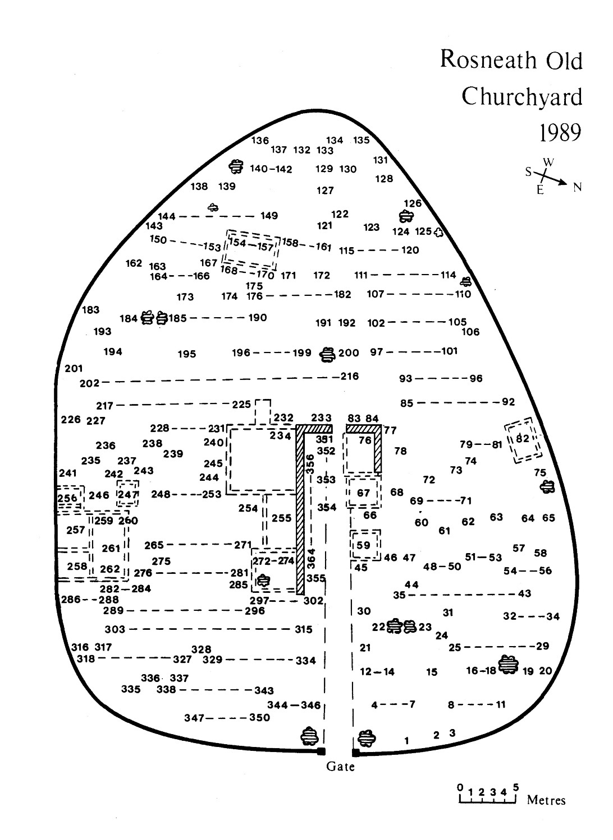
Between 1987 and 1989, the Civil Service Retirement Fellowship under the direction of Jack Read and Harry Smallbone, led members of the community in recording the old graveyard. Those efforts gained national recognition through the meticulous work of recording the old graveyard, applying best archaeological practice to, – map, survey, create site plans, assign numbers to individual memorials, and record condition data via professional photographic study, to accurately copy the fading stone inscriptions before they where lost to the community and nation. The outcome of that study, produced a tome of memorials of our community’s past that was distributed to local libraries, schools and today is available internationally to support genealogical and historical study.
Today, some thirty-seven years later, the churchyard has changed little, though the passage of time is unmistakable. The headstones have weathered beneath the elements; some remain steadfast, while others have fallen, broken and scattered. Now overgrown and touched by neglect, the churchyard nevertheless retains its quiet, atmospheric beauty. It stands as a poignant reminder of the community’s long history, where every stone and shadow speaks of lives once lived and remembered.
Internet link to Rosneath Graveyard.
The Scanning and Uploading
In 2004 the earlier produced record of the Rosneath Old Kirk and Graveyard was transferred to the digital form through the hard work of Bill Jackson.
The scanning and uploading of this community asset ensured that a small but meaningful piece of our community was preserved for posterity, by making it digitally accessible.
Thank you Bill. Through you foresight and hardwork, you helped safeguard not only the record’s contents, but also provided an insight into our communities the stories, traditions, and shared experiences, allowing them to endure and be discovered by people around the world for generations to come.
https://web.archive.org/web/20130127131021/http://members.madasafish.com/~fairenough/index.html
Map of the old Rosneath Grave yard with Stone numbers