Today, on the northern side of Clynder, opposite the village bowling green, an unremarkable lay-by blends effortlessly into the landscape. A metal fence, colourful flower troughs, a weathered bench, recycling bins, and a nearby bus stop give it the familiar look of a practical roadside stop. There is little to suggest that this quiet patch of ground holds any significance at all. Yet beneath its ordinary appearance lies a forgotten history, one that has all but vanished from view.
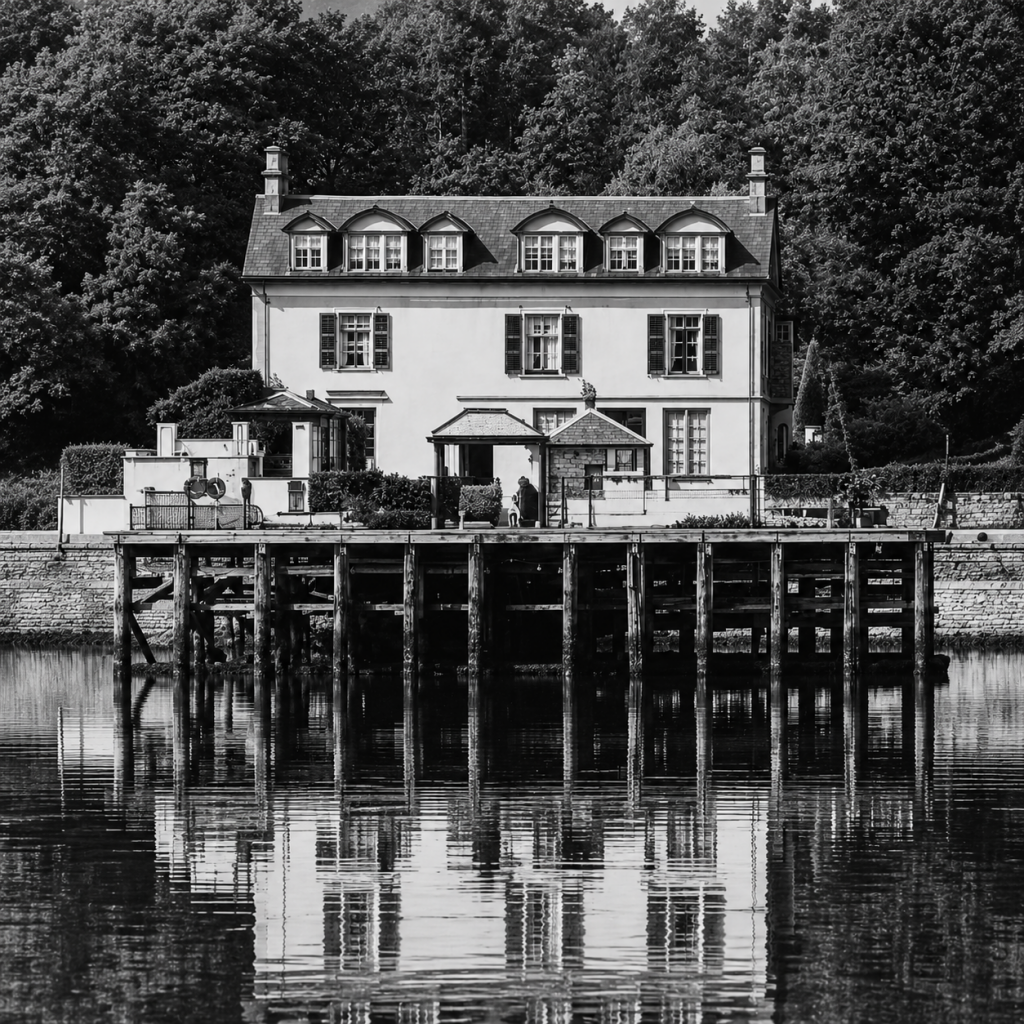
It is easy to be captivated by the sweeping beauty of the Gare Loch, its waters reflecting the ever-changing skies, while the hills beyond rise gently to embrace the shoreline. The view is one of quiet grandeur, drawing the eye across the loch rather than beneath one’s feet. Few visitors realise that they are standing on the solid stone remains of what was once the entrance to one of the loch’s most elegant Victorian piers.
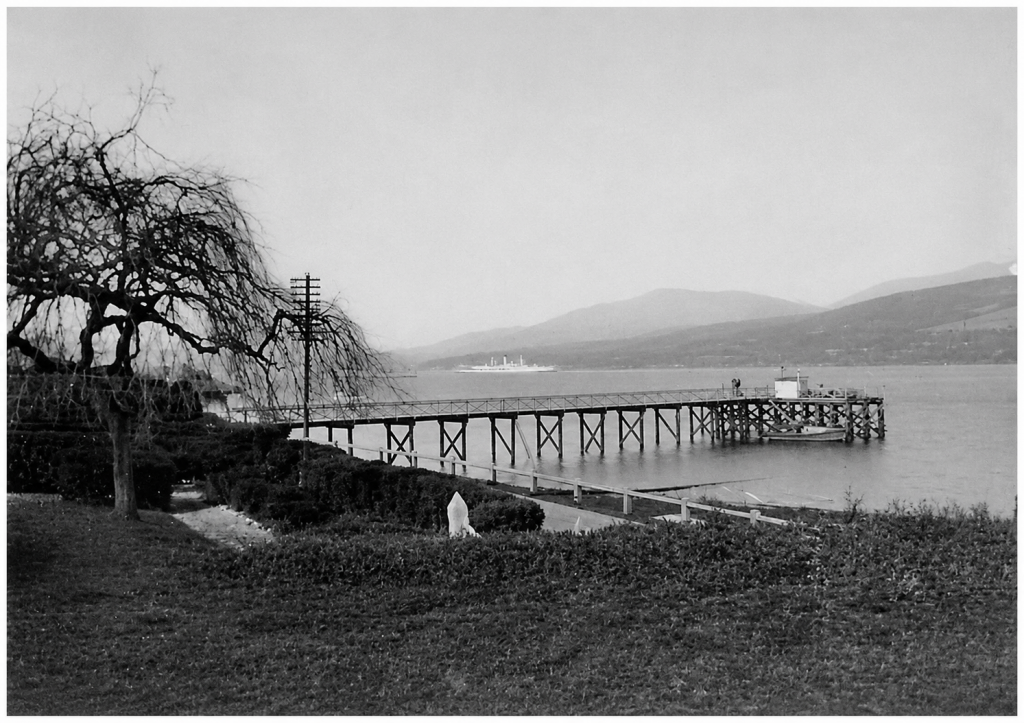
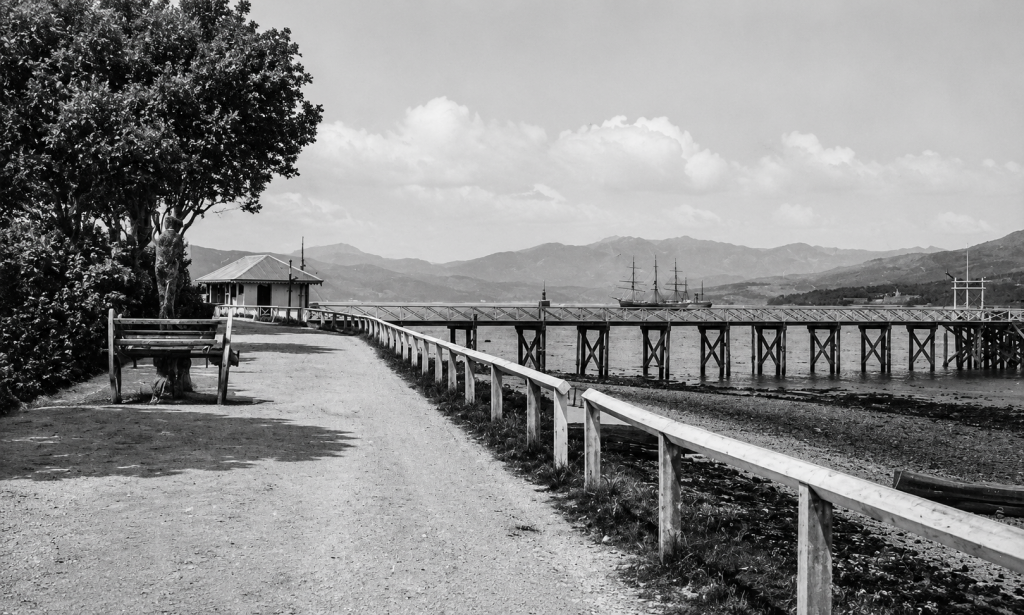
The Barremman pier was opened in 1878 by Robert Thom of the Barremman Estate, on the site of the long-forgotten ferryman’s berth at Crossowen Point1. It was built to rival the nearby Clynder Pier, which had been established eleven years earlier, in 1867, by the local pier master and hotelier Archibald Chalmers, with the support of his brothers, William and Donald.
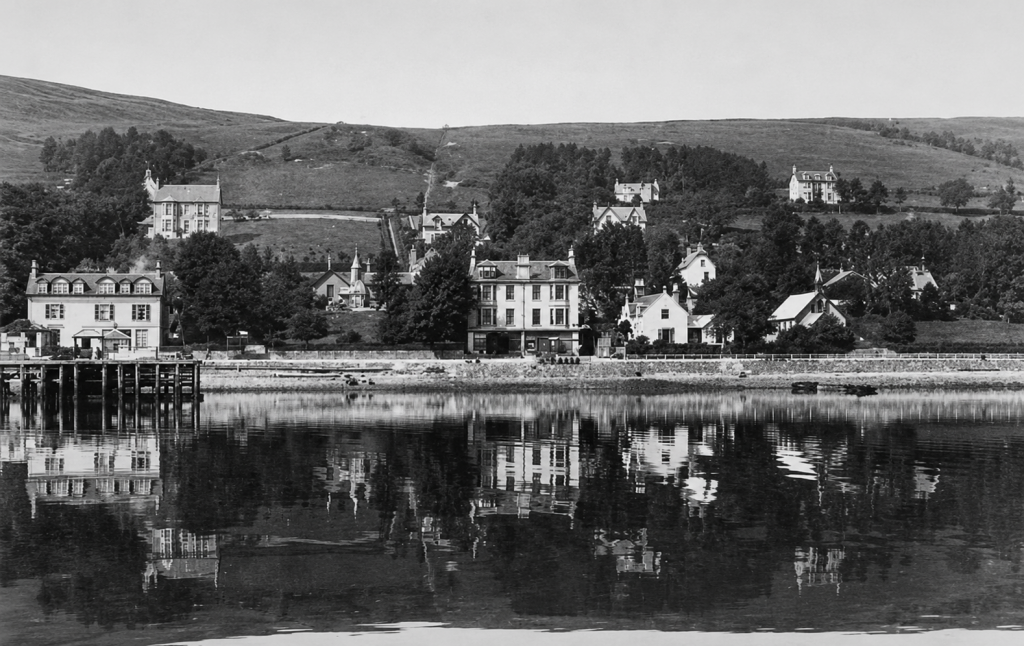
Thom’s new pier formed part of his wider plans to develop the Barremman Estate and attract visitors and prospective feuars , thereby sparking a long-running rivalry with the Chalmers family’s established pier and Hotel business.
Figure 3 –
Barremman Pier was described as being –
“101 yards long, the gangway is 14 feet broad, while the pierhead is 90 by 24 feet. The piles are all greenheart, which is the most durable description of wood for this purpose, as it is not attacked or injured by the sea worm. The waiting-rooms are large and commodious and the arrangements for landing horses and cattle are very complete. The pier is furnished with a large powerful crane, which cannot fail in being of great utility. Altogether it is one of the finest piers on the Clyde, and will be of great public convenience, while it will give an additional impetus to feuing, as it is situated on the centre of the Barremman estate”.
Glasgow Herald, June 10, 1878.
During the Victorian era, fierce competition existed between pier owners and ferry operators, as considerable profits could be made from passenger traffic. Roads of the time were generally poor, often little more than rough unpaved tracks, and journeys by horse and carriage were slow, uncomfortable, and frequently unreliable.
By contrast, the River Clyde and the Firth of Clyde formed a vast natural highway. Paddle steamers and passenger ferries provided a faster, cheaper, and often far more comfortable means of travel than overland transport. As a result, piers became vital gateways for local communities, connecting villages such as Clynder with the bustling towns and cities around the Clyde. At the time of writing this article there are some members of this community that still remember going to school by Steamer.
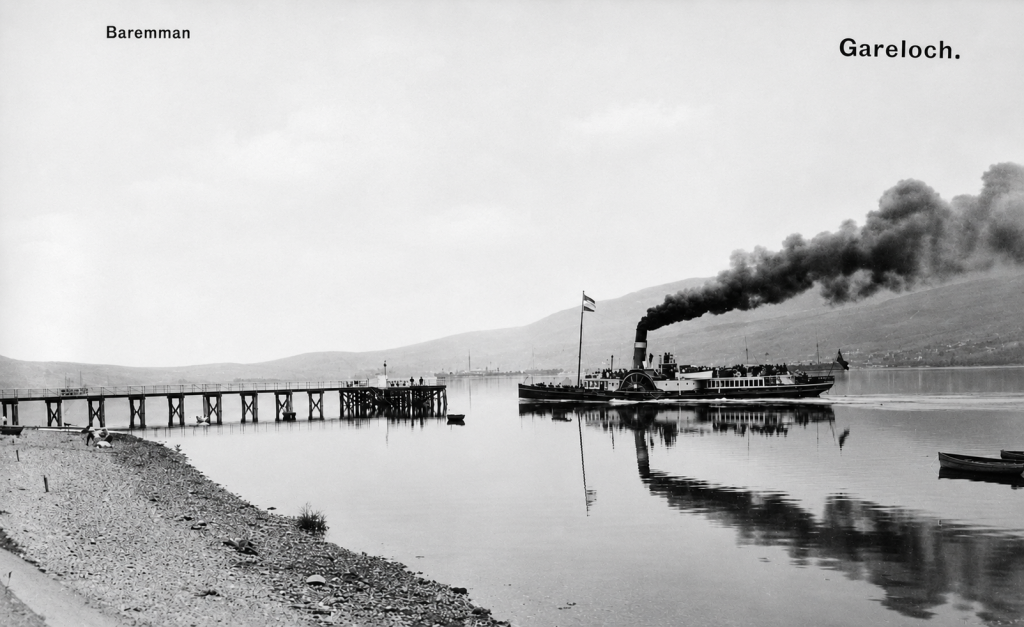
Barremman Pier quickly became an important landing place. Robert Thom had it built not only to serve residents, visitors, and holidaymakers, but also to make his Barremman Estate more attractive to prospective feuars by offering the convenience of direct steamer access. In doing so, the pier intensified the rivalry with neighbouring Clynder Pier, as both competed for the lucrative passenger steamer trade.
The rivalry between the two proprietors was intense. With the piers standing barely 500 metres apart, taking four minutes to dock between each – longer than it would to walk, yet some passenger steamers called at both. Despite being located only a little way from the centre of the village, Barremman Pier gradually captured the greater share of the traffic. Its superior construction and safer approaches made it the preferred landing place for both steamer operators and passengers.
By comparison, Clynder Pier fell into an increasing state of disrepair and after the death of Donald Chalmers in 1886, it was offered for sale after a family dispute between the Chalmers brothers and his widow.
Robert Thom purchased the pier in front of the Hotel and promptly closed it in May 1892. It was demolished within a year, and Barremman Pier was thereafter renamed Clynder Pier, leaving it as the village’s sole passenger landing stage.
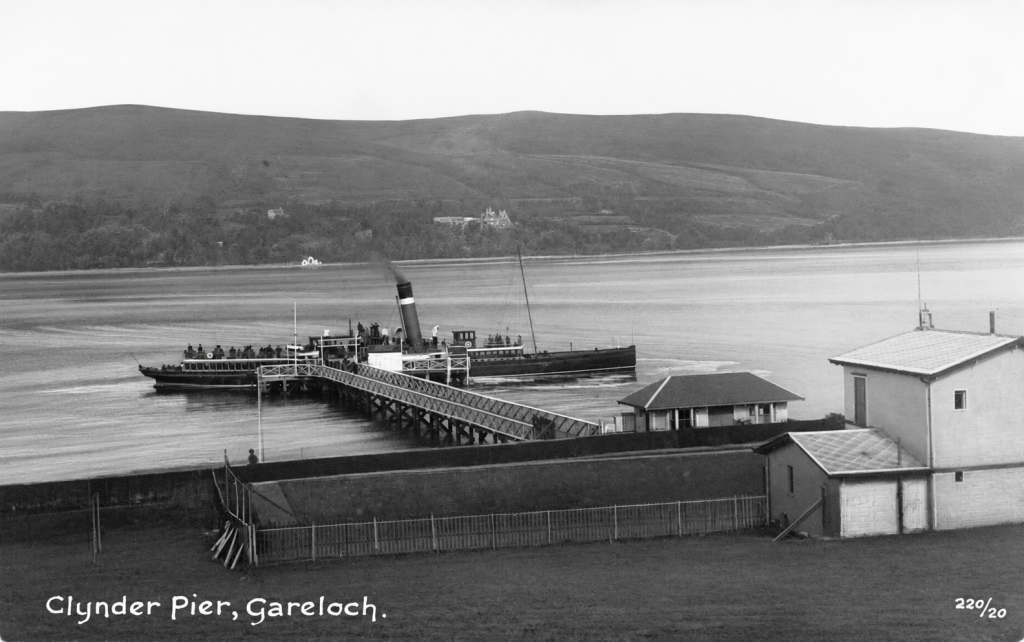
The renamed pier was loved and continued to serve the community for several decades.
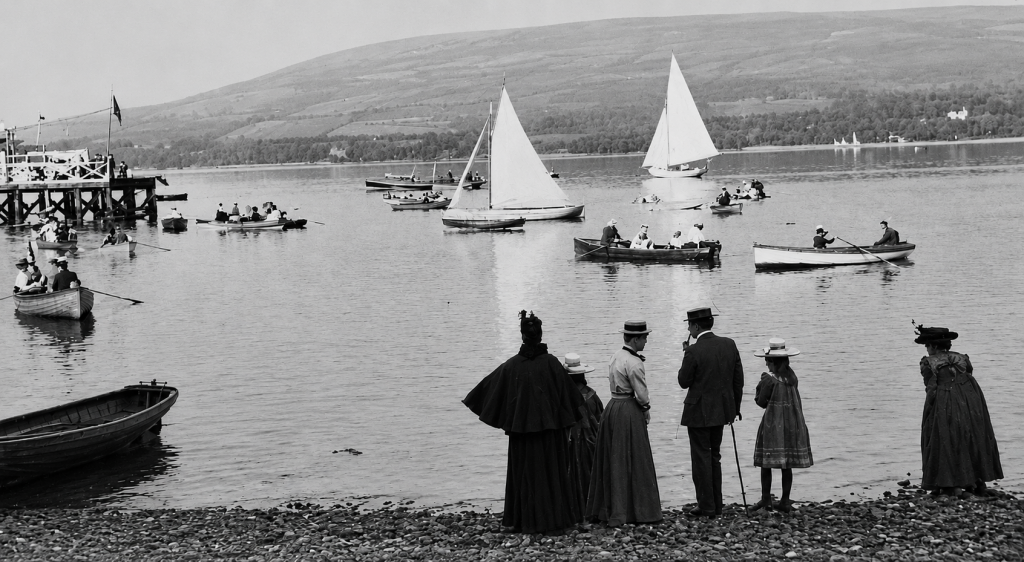
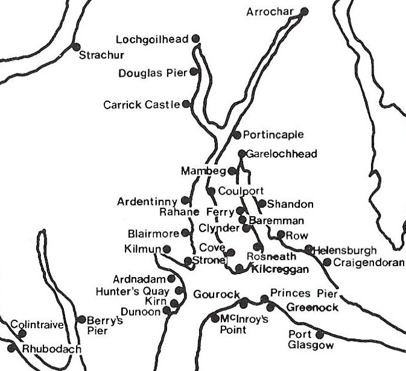
However, like many piers around the Firth of Clyde, such as Rahane, Mambeg, Garelochhead, Shandon, Rhu, Rosneath, Cove, and Coulport, their fortunes declined with changing patterns of transport and the outbreak of the Second World War. Military restrictions imposed in 1939 brought steamer services to an end, and Clynder Pier and others never reopened to regular passenger traffic.
Generally, Steamer traffic in the Clyde declined over other forms of seemingly more efficient transport. This shift was accelerated by 20th-century mass car ownership, better road infrastructure, and changing economic conditions that made traditional steam vessels increasingly expensive to operate.
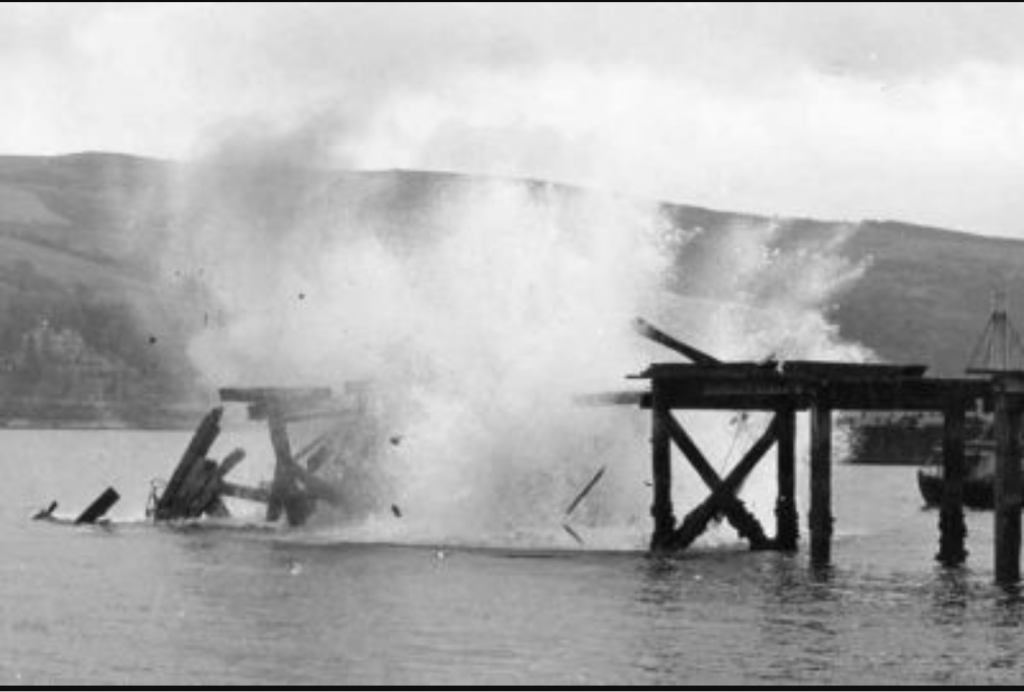
By the 1960s the once-bustling Clynder Pier had fallen into an unsafe condition. In November 1967, it met an unceremonious end when demolished using just 2 lb of plastic explosive, the cheapest method of removing the structure. At the invitation of D. Smith of Construction and Marine Ltd., Garelochhead, District Clerk William Swan pressed the firing plunger, marking the end of nearly ninety years of Clynder Pier’s service to the community.
Further reading
Graham Lappin – https://www.dalmadan.com/?p=11132
Notable people
Robert Thom of Barremman was a prominent Greenock shipowner who purchased the 600-acre Barremman estate on the Rosneath Peninsula in 1871. He was also the Laird of the Isle of Canna.
His connection to the Rosneath area includes a few notable details, such as the development of the Barremman estate (which included the village of Clynder) that he purchased from the Crawford-Cumming family who in turn had acquired from Campbell of Ardentinny in 1706 . Thom actively developed the land by allocating feus to encourage the building of summer homes for affluent merchants and middle-class visitors from Glasgow.
The Pier Dispute occurred when Thom sought to increase the value of his property, where he proposed and built his own pier in 1878 near Crossowen. This led to a fierce local dispute with Archibald Chalmers, the owner of the nearby Clynder Pier. Ultimately, Thom’s superior pier won the Steamer traffic, leading to the older Clynder pier’s demolition in 1892.
Thom was also the Laird of the Isle of Canna. He bought the Isle of Canna in 1881, whom Thom’s descendants later sold to the folklorist John Lorne Campbell in 1938.
- Etymology: The name is thought to derive from the Gaelic Crois Eòghainn, meaning “Eoghan’s (Owen’s) Cross,” indicating an ancient marker or crossroads on the Lochside. ↩︎